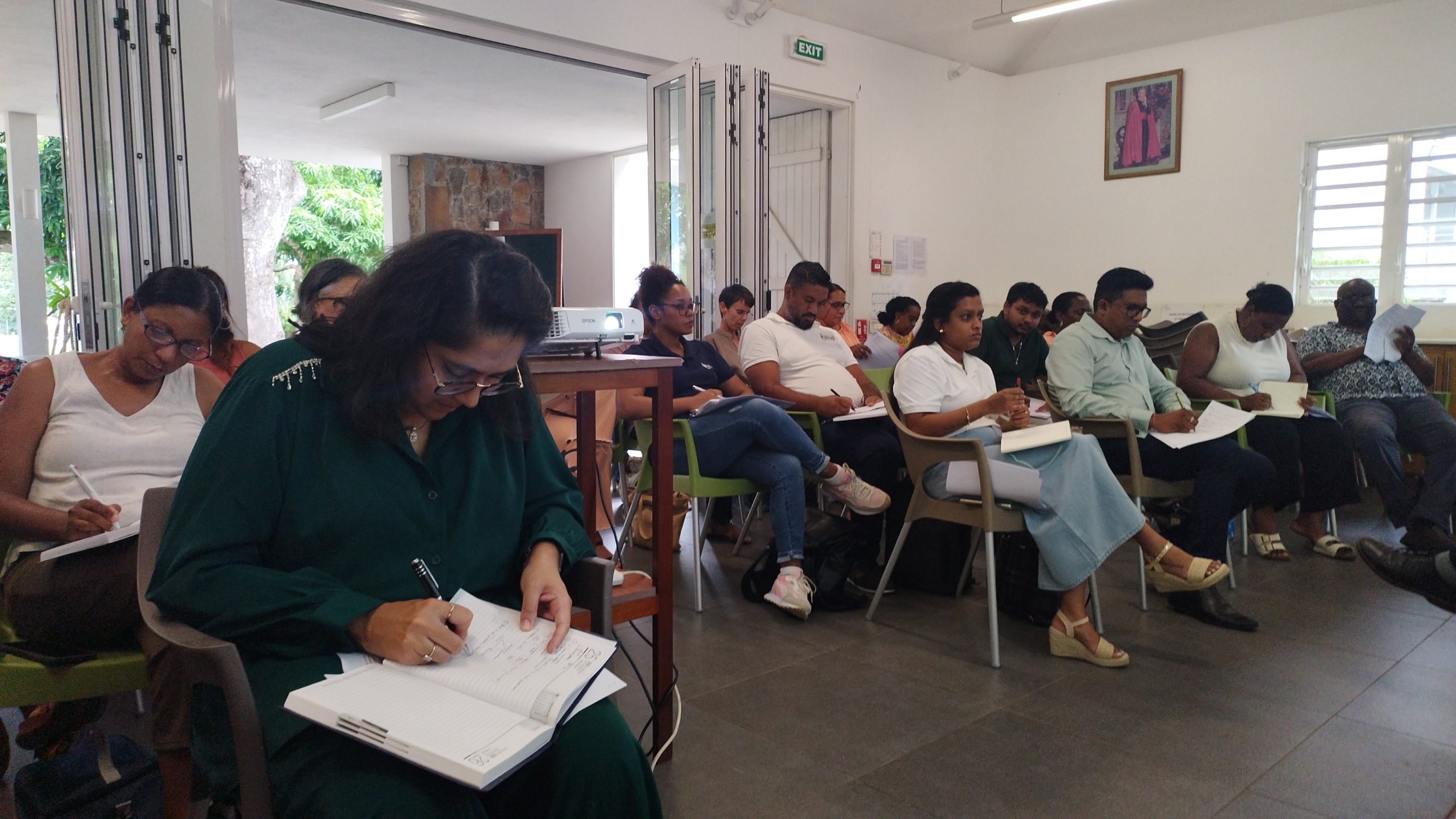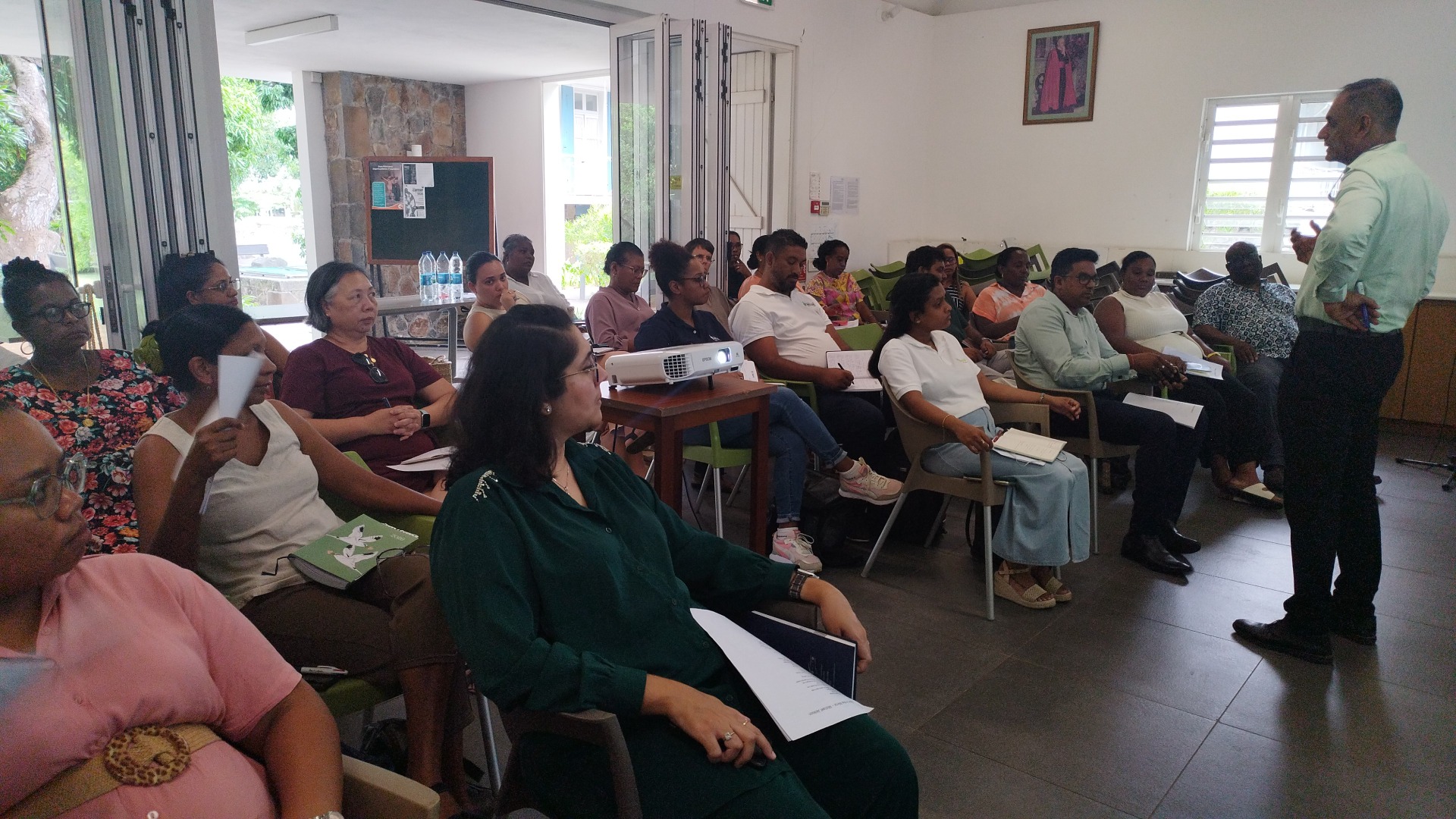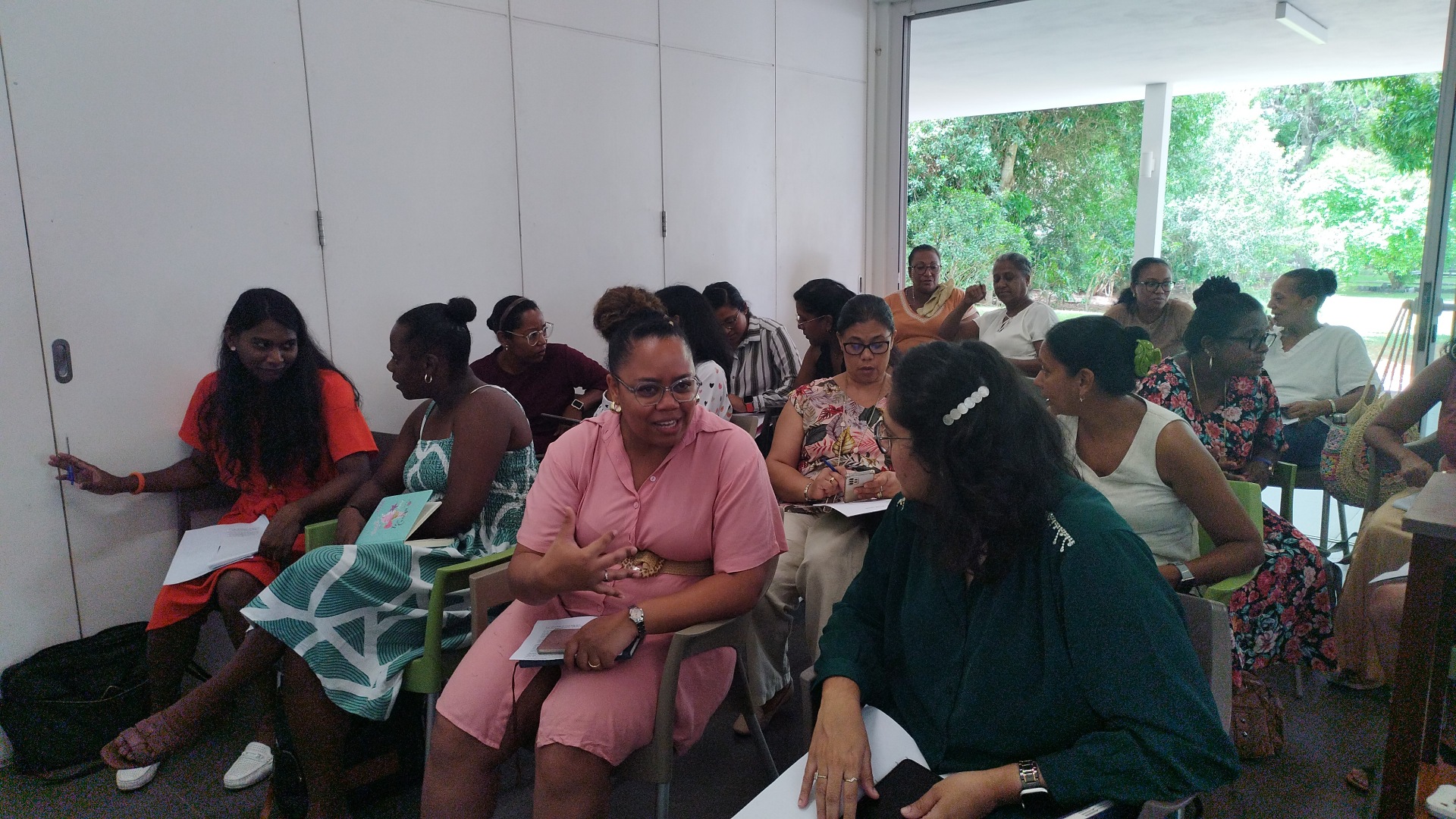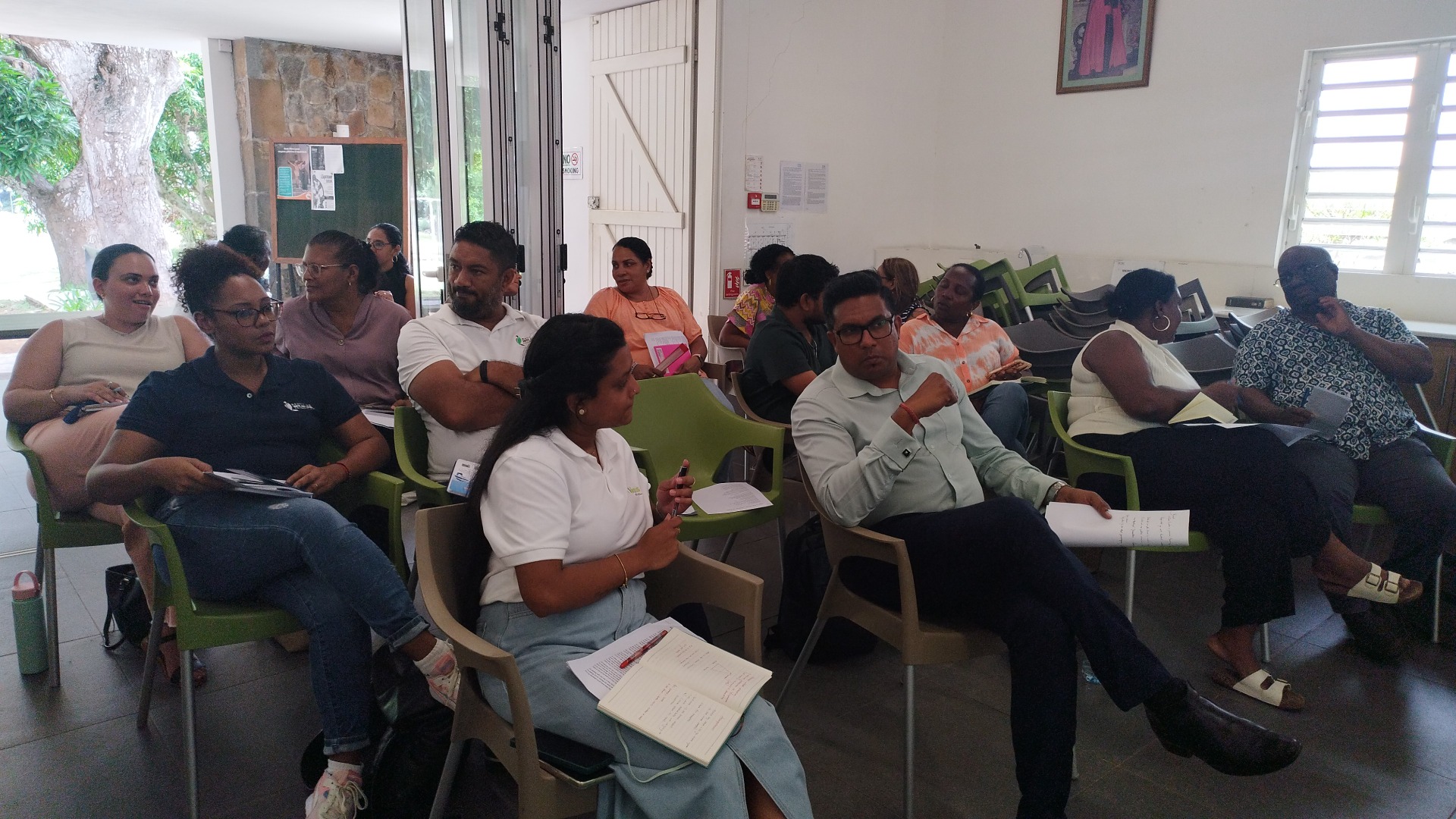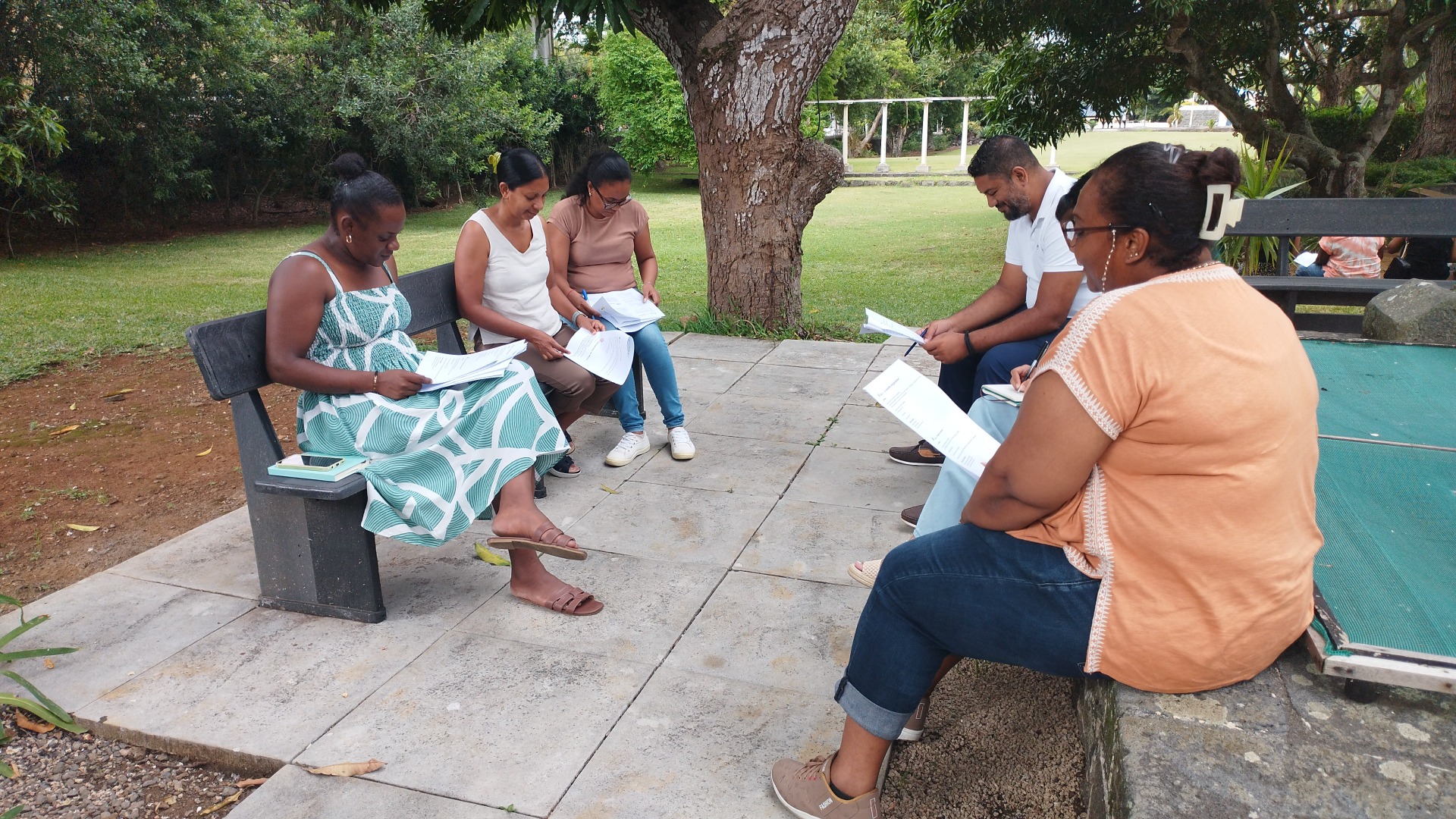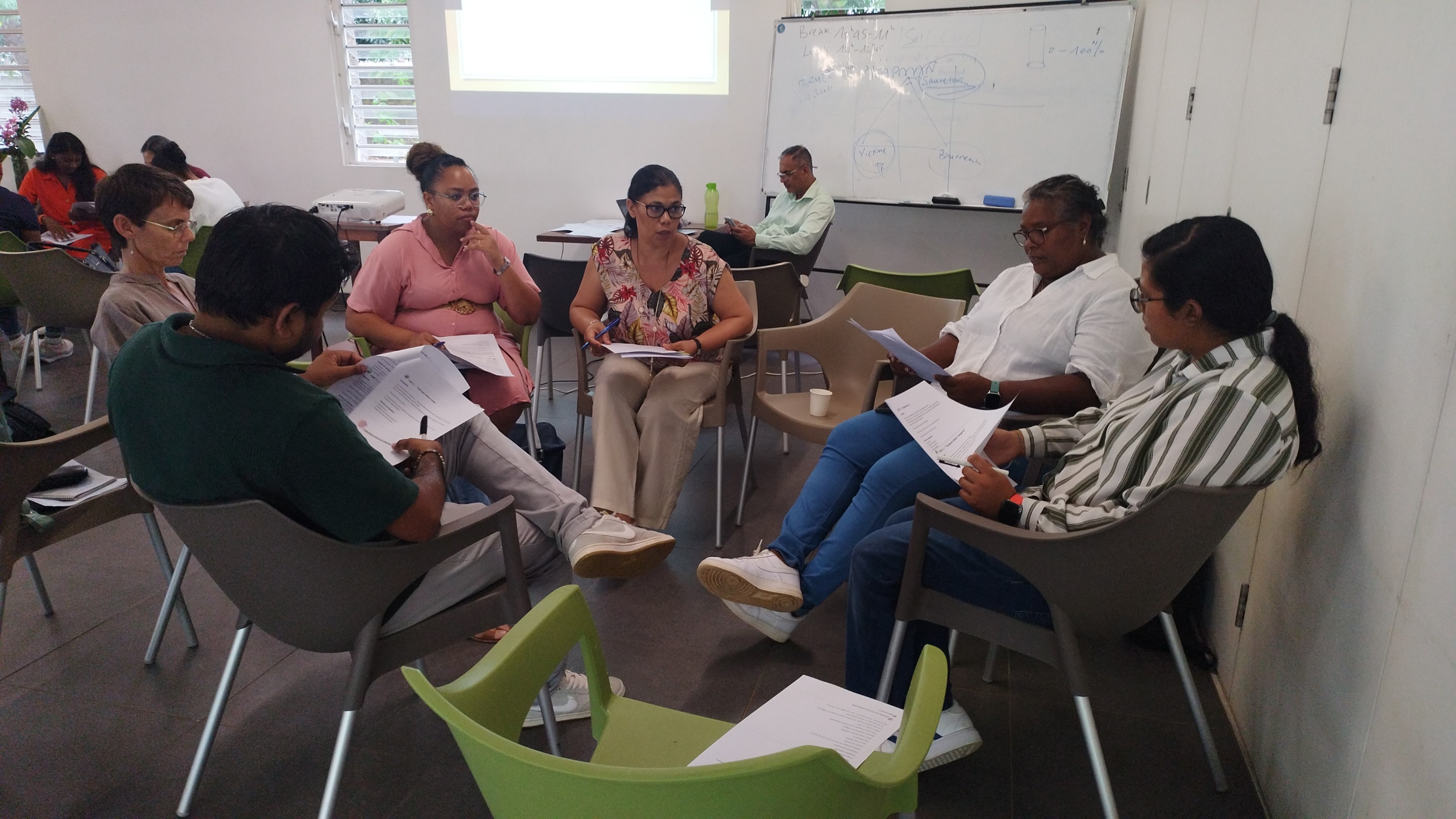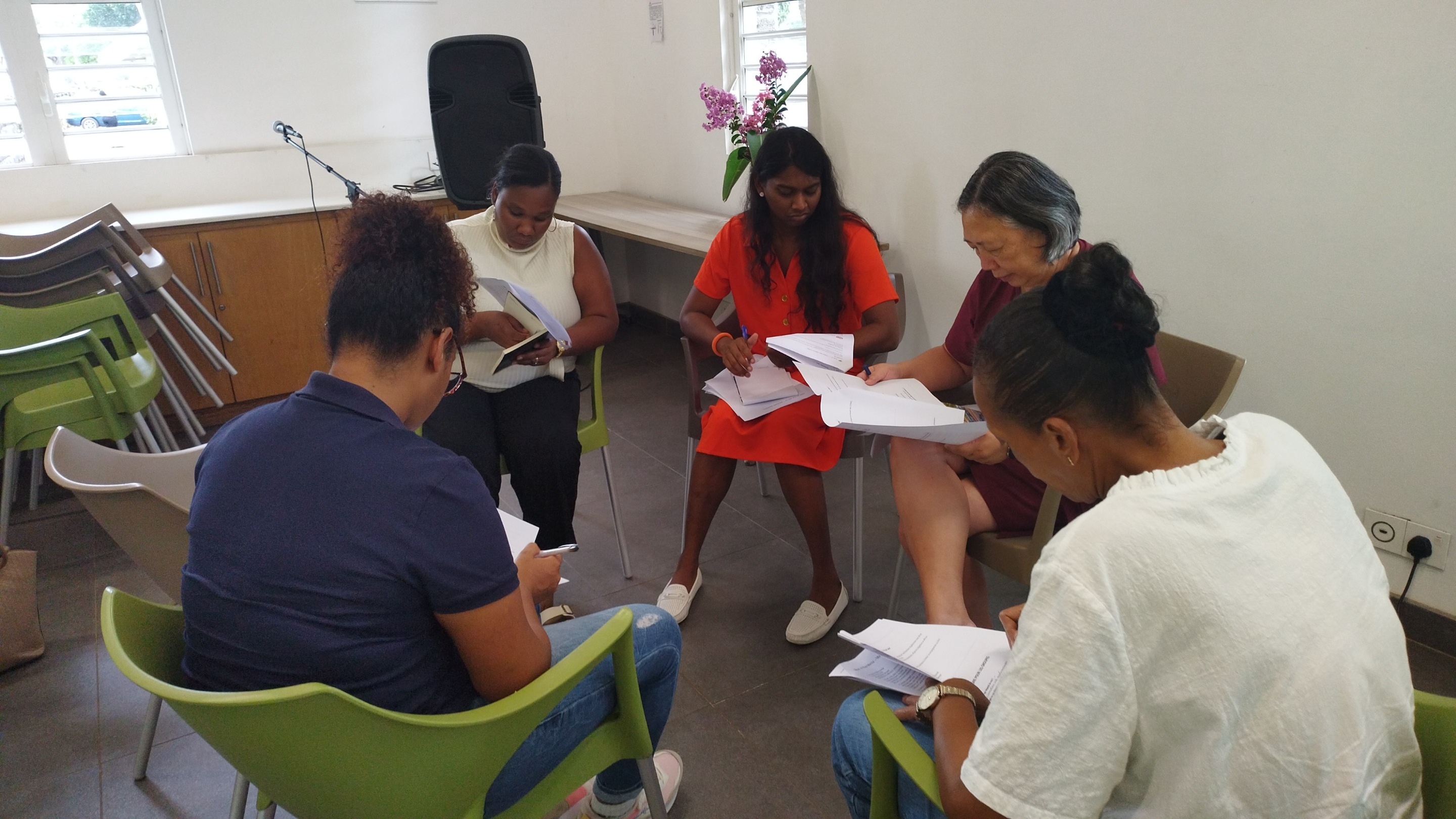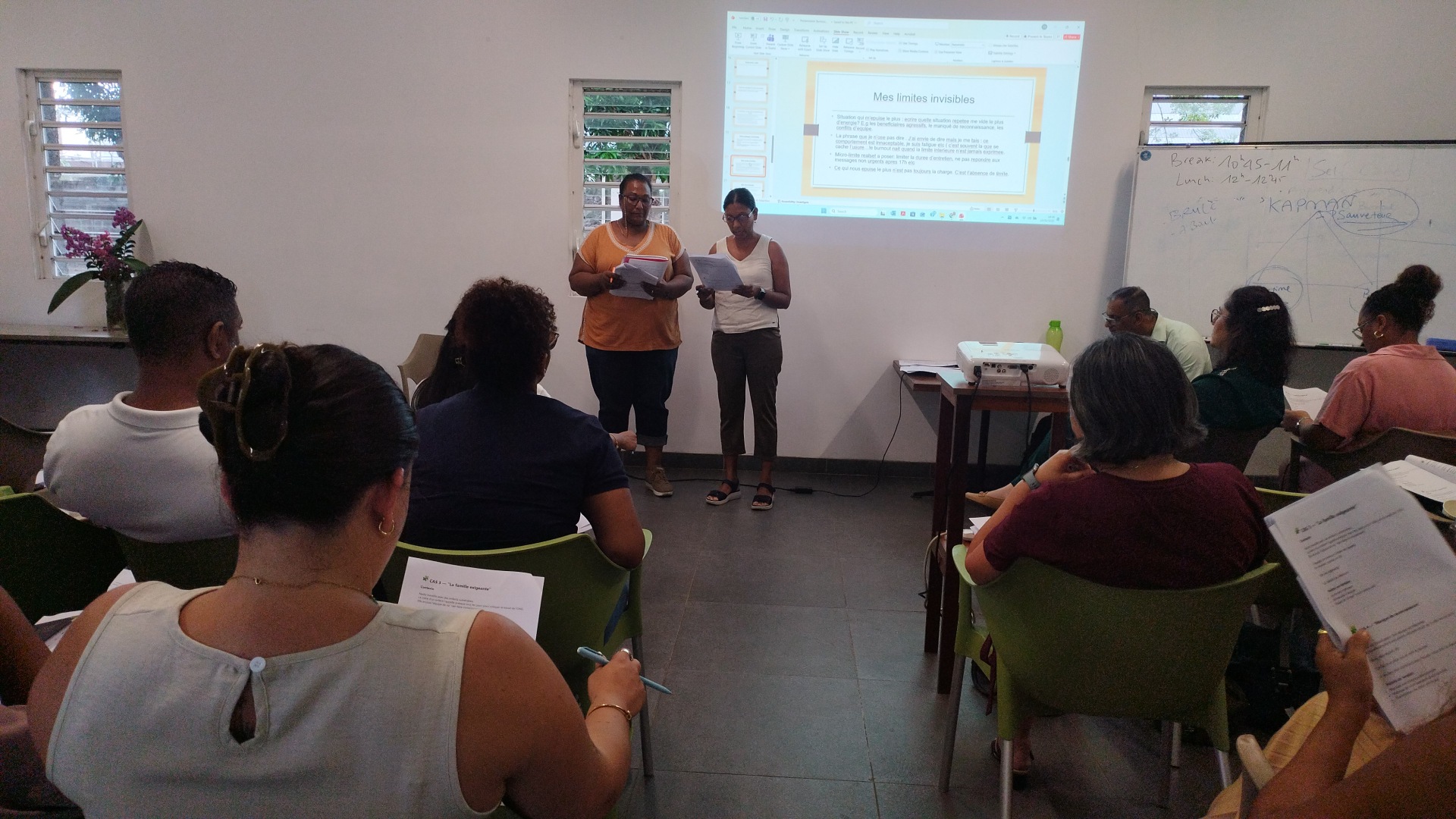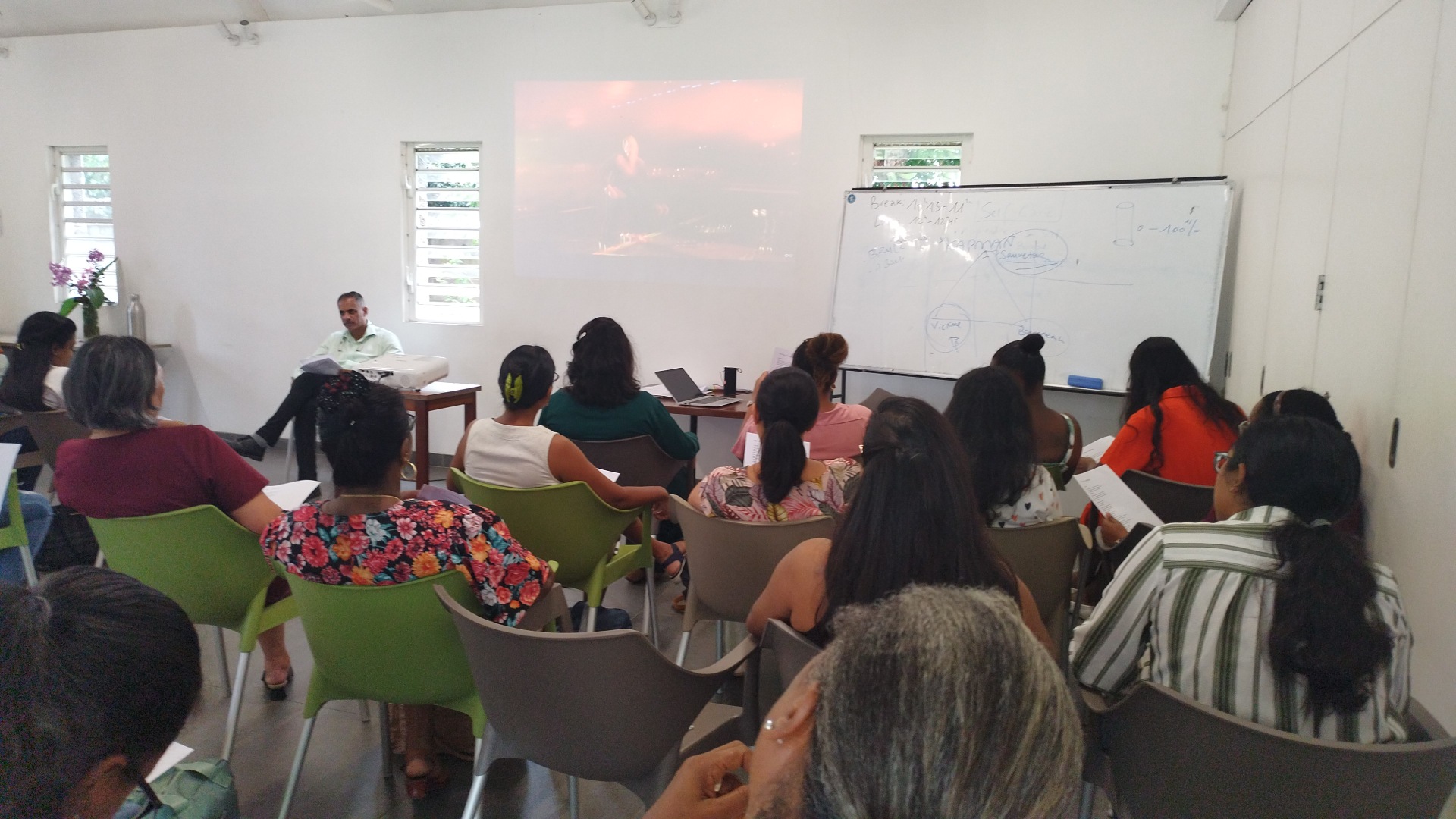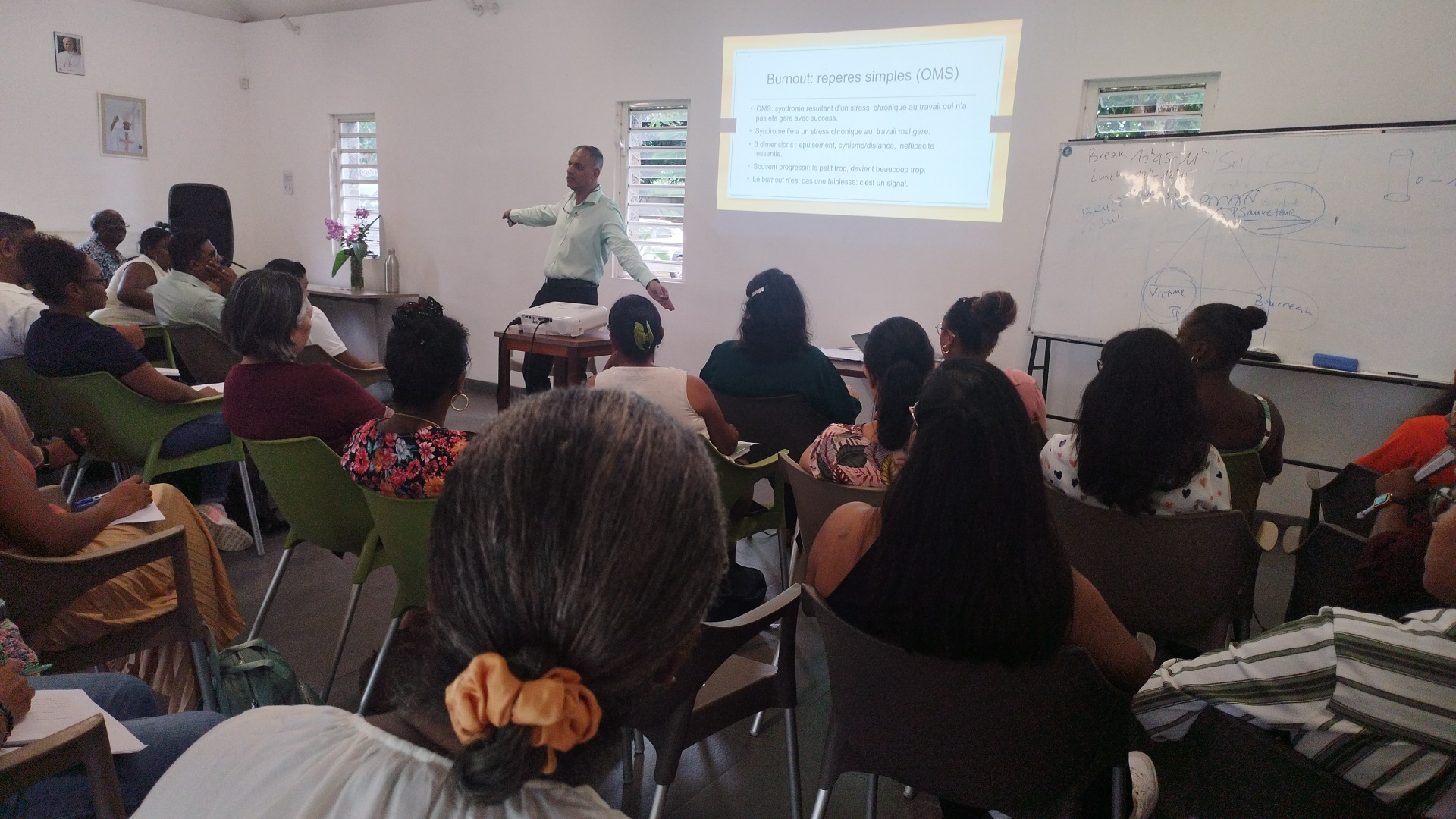

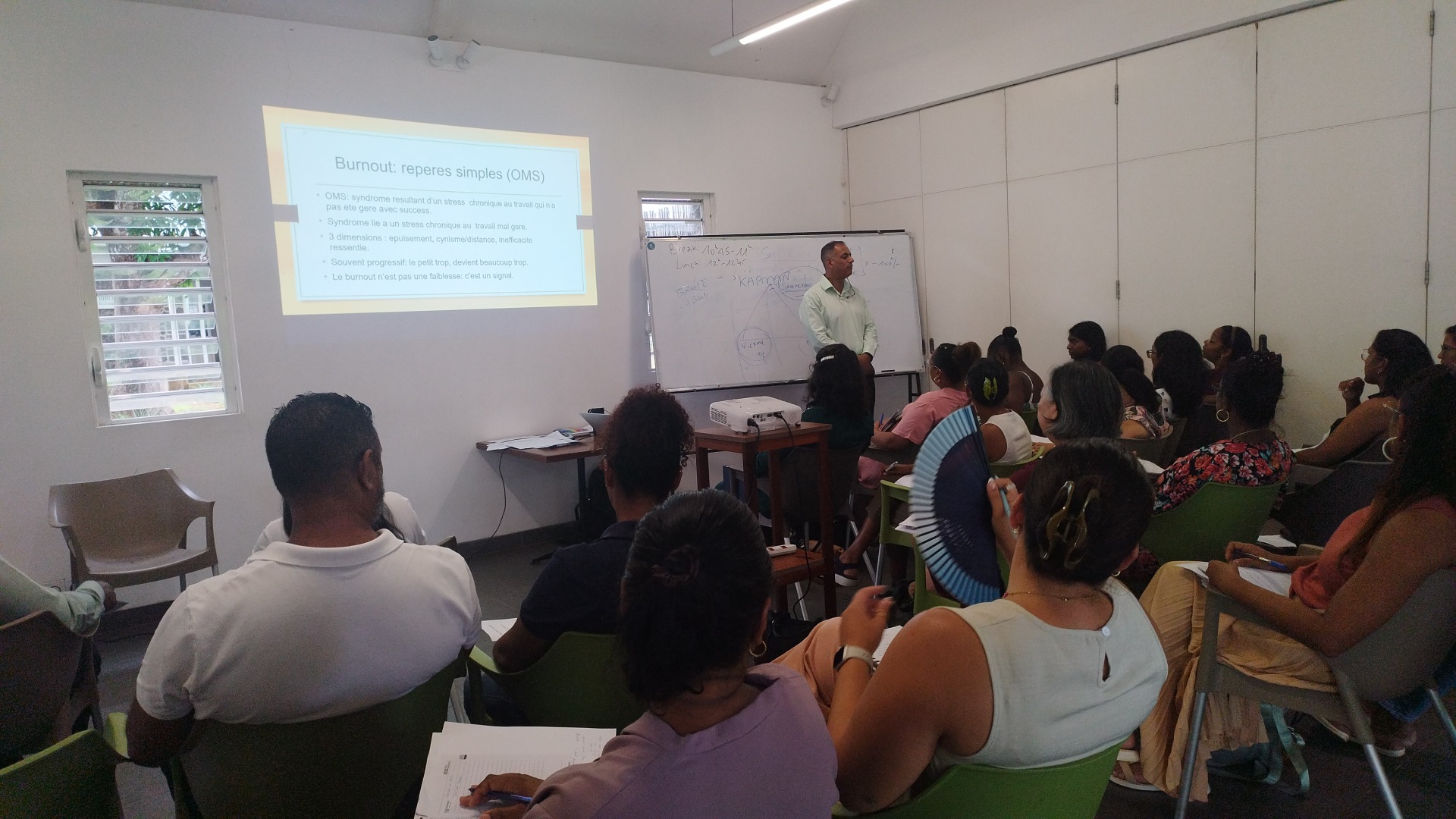
To support NGO professionals, ACTogether organized a workshop on self-care and burnout, bringing together 30 NGOs across sectors such as poverty alleviation, disability, and social inclusion.
The session focused on identifying signs of burnout and exploring practical strategies to prevent it. Participants reflected on their own well-being and learned to integrate simple, sustainable self-care practices into daily routines, ensuring they can continue their meaningful work with resilience and balance.
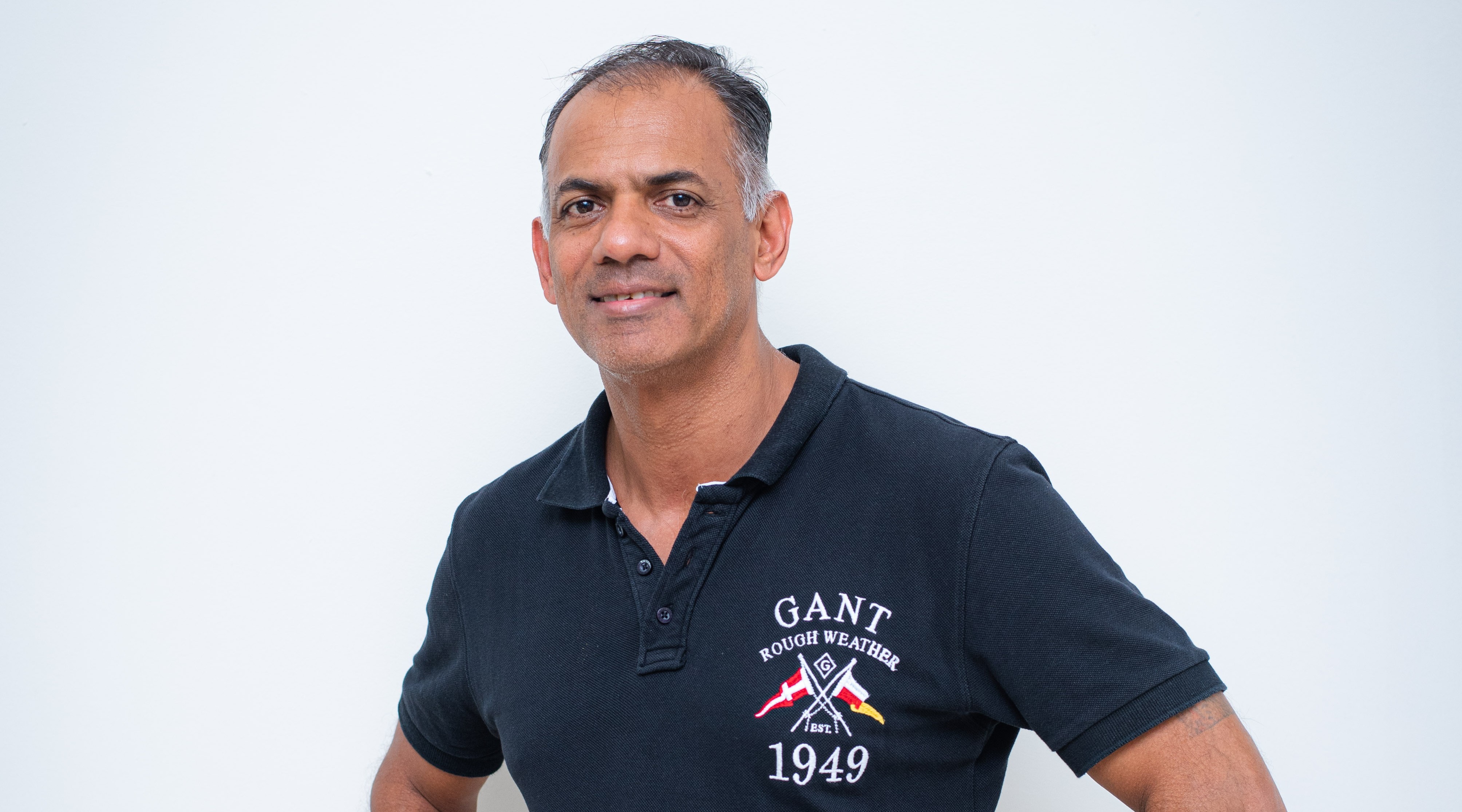
Insights from Vijay Ramanjooloo, clinical psychologist and session facilitator:
- ACTogether: Why is self-care important in the NGO setting?
Vijay Ramanjooloo: Self-care is essential in the NGO context because the work is often emotionally demanding and NGO staff are constantly exposed to difficult human situations such as poverty, trauma, injustice, and crisis.
They not only work long hours but are also emotionally invested in what they do. Over time, this can lead to exhaustion, frustration and loss of motivation if there is no space to recover.
In many NGO resources are limited, expectations are high and there’s a strong sense of responsibility, because of these, NGO staff tend to put beneficiaries first and neglect themselves.
Self-care is therefore not a luxury because it allows NGO staff to stay emotionally available, maintain professional boundaries and continue doing meaningful work in a sustainable way.
- ACTogether: How can we recognize burnout ?
Vijay Ramanjooloo: There will be physical, emotional and behavioural signs and symptoms.
The physical signs are constant fatigue, even after rest, headaches, body tension and sleep problems.
The emotional signs are feeling drained or overwhelmed, irritability, a drop in patience, loss of empathy and feeling numb or disconnected.
You will notice a change in the behaviour such as withdrawal from colleagues, reduced productivity or increased mistakes, increased absenteeism and loss of motivation or sense of purpose.
A common sign in NGO settings is when a previously engaged person starts saying: 'I just do the job and go.'
If you notice these signs and symptoms, pay attention!
- ACTogether: Are there ways to prevent burnout in the NGO set-up?
Vijay Ramanjooloo: Certainly, at different levels and that does not necessarily imply huge sums of money.
At individual level, people can:
- Take short pauses during the day
- Set small boundaries
- Stay connected to activities outside work
- Recognize early signs of fatigue
At team level, team members can:
- Create spaces to talk
- Normalize saying 'I am not okay'
- Avoid a culture of constant urgency (firefighting mode)
- Support each other
At organisational level:
- Acknowledge workload realities
- Encourage rest and leave
- Provide emotional support when possible
I would say; the key idea is to Aim for what is feasible, not perfect.
- ACTogether: What would be some points to remember?
Vijay Ramanjooloo: Some essential elements to keep in mind would be:
- You cannot pour from an empty cup
- Burnout is not a personal weakness
- NGO workers are more vulnerable due to strong values and commitment
- Self-care includes team care and organisational responsibility
- Small daily practices are more effective than occasional big actions
- Lastly, a question to reflect on regularly: What keeps me going in this work, and what is slowly draining me?